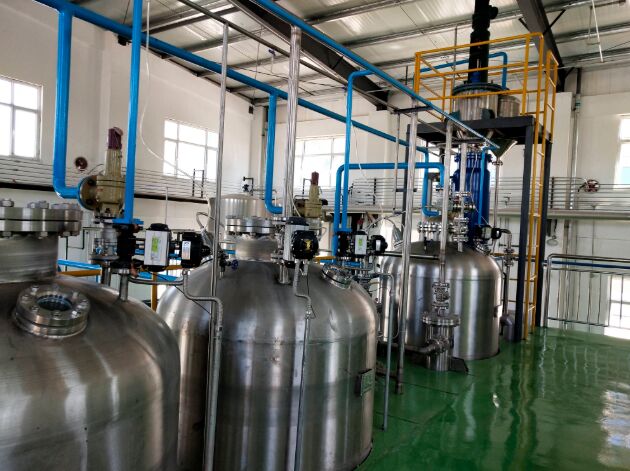
Soy Protein Isolate (SPI) Production Line (Protein content >90%; high-end food-grade powder)
Raw Material: Low-temperature defatted soybean meal; Finished Product: Milky-white protein powder for beverages, meat products, and health supplements
Pre-treatment Section
Cleaning screen, magnetic separator, grinder, conditioning tank, mixing/dissolution tank (alkali extraction of protein)
Solid-Liquid Separation Section (Core)
Horizontal decanter centrifuge, disc-stack centrifuge: Separates soy residue (okara) from protein liquid
Acid Precipitation & Neutralization Section
Acidification reaction tank, secondary centrifuge, washing/neutralization tank (precipitating pure protein)
Refining & Concentration Section
Plate heat exchanger, flash evaporator, high-pressure homogenizer, instant sterilization unit
Drying & Powdering Section (Most expensive single unit)
Centrifugal spray drying tower, cyclone separator, bag filter recovery system
Post-processing & Packaging
Vibrating screen, powder mixer, fully automatic powder packaging machine
Capacity & Investment Reference
Small-scale (7–15 tons/day): Complete line approx. 2–6 million RMB
Medium-scale (30–50 tons/day): 12–22 million RMB
Large-scale (100+ tons/day): From 20 million RMB; includes solvent recovery and wastewater treatment systems
Process Flowchart
Low-temp soybean meal → Alkali extraction → Centrifugal residue removal → Acid precipitation → Washing/neutralization → Concentration & sterilization → Spray drying → Finished protein powder
Soy Protein Concentrate (SPC) (Protein 65%–72%; feed / general food grade)
Raw Material: Defatted soybean meal; sugars removed via low-temperature ethanol extraction
Core Equipment
Cleaning & crushing unit, ethanol leaching tank, horizontal centrifuge, low-temp vacuum desolventizer, flash dryer, grinding & screening unit, packaging unit
Capacity & Price
10 tons/day complete line: 1.5–3.5 million RMB; investment cost is much lower than SPI; primarily used for feed ingredients
Textured / Spun Soy Protein TVP/TSP (Textured Vegetable Protein: chunks, granules, or shreds produced via extrusion)
Raw Material: Defatted soy flour; fibrous meat-like texture created through high-temperature, high-pressure twin-screw extrusion; lowest barrier to entry and minimal investment.
Standard Line Configuration
Raw Material Unit: Feeding machine, powder mixer, stainless steel storage silo
Core Unit: Twin-screw extruder (DSE65/DSE77/DSE85)
Drying & Cooling: Multi-layer mesh belt dryer/oven, cooling conveyor
Downstream: Grinder, seasoning drum, granule packaging machine
Capacity & Pricing (Standard for Export)
Small-scale DSE65: 150–220 kg/h; complete line 35,000–80,000 USD
Medium-scale DSE77: 300–500 kg/h; complete line 120,000–200,000 USD
Large-scale DSE85: 600–1,000 kg/h; complete line 250,000–500,000 USD
Process Flow
Mixing & conditioning of soy flour → Twin-screw extrusion & fiber formation → High-temperature drying → Cooling → Dicing/Grinding → Seasoning & packaging