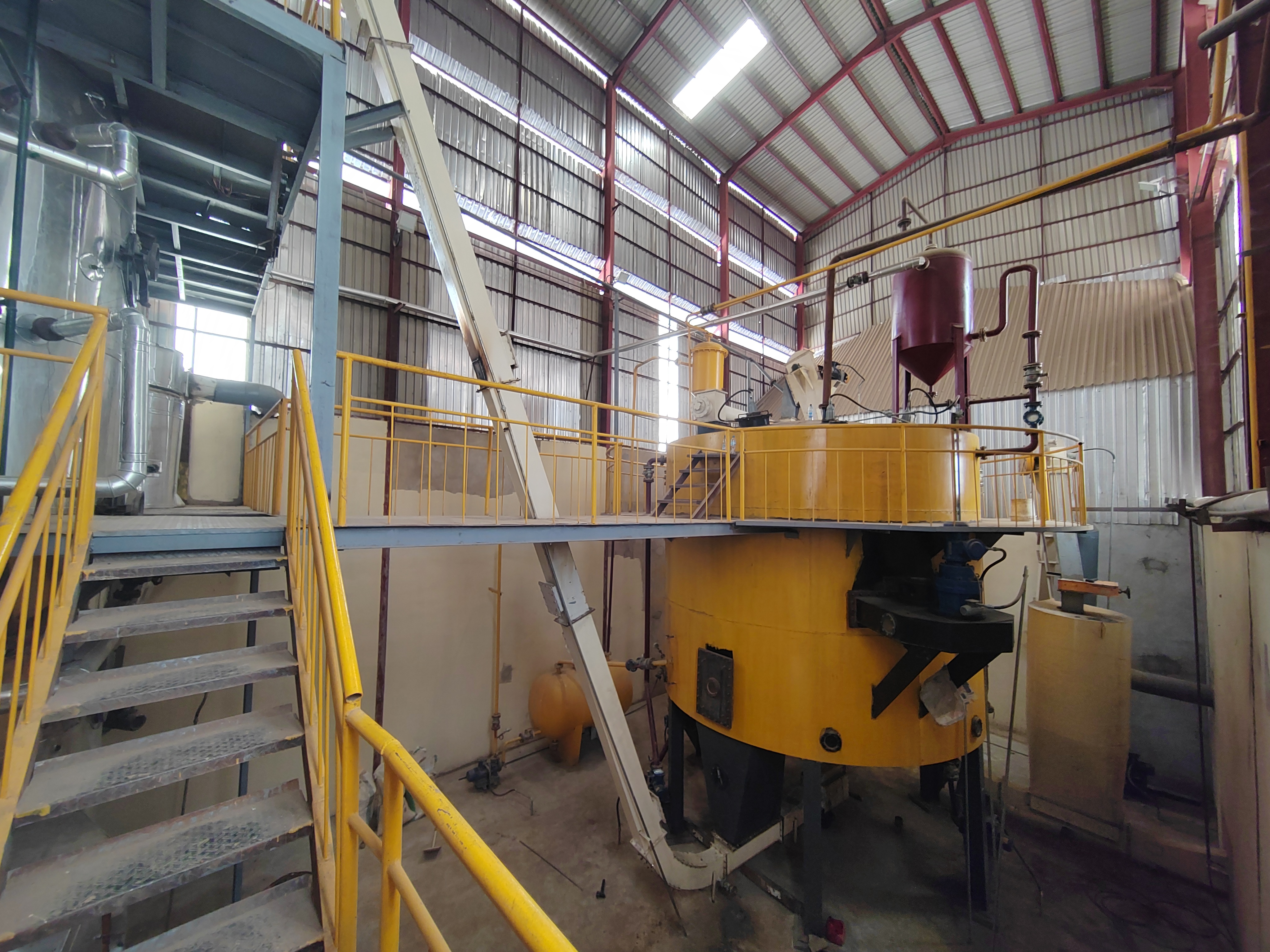
The essence of the solvent extraction process: Extraction is not about "soaking the oil out," but rather "washing" the oil out of the raw material flakes using a solvent.
Mechanical pressing relies on compression, which inevitably leaves 5%–8% residual oil in the cake. Solvent extraction, by contrast, relies on dissolution, allowing the residual oil content in the meal to be reduced to below 1%. This is why low-oil-content raw materials (such as soybeans, rice bran, and corn germ) must be processed via solvent extraction.
The Principle in Two Points
"Like dissolves like": Oils and fats are highly soluble in non-polar solvents like n-hexane, whereas phospholipids, proteins, and fibers are insoluble.
Concentration gradient: The lower the oil concentration in the solvent, the more easily the oil can be extracted from the raw material flakes. Therefore, the extractor operates on a counter-current principle: fresh solvent comes into contact with the "lean" material (material nearly depleted of oil) just before it exits the extractor, while the oil-rich mixture (the solvent with the highest oil concentration) comes into contact with the "rich" material (freshly introduced raw material).
In short: The raw material and the solvent move in opposite directions, ensuring the oil is effectively "washed" out.
Three Process Streams: Solids, Liquids, and Gases
The process involves three distinct streams—solids (meal), liquids (oil), and gases (solvent recovery)—all of which share a common "solvent pool."
· Solid stream: Raw material flakes → Extractor → Wet meal (containing 25%–35% solvent) → DTDC (Desolventizer-Toaster-Dryer-Cooler) → Finished meal (residual solvent ≤ 500 ppm).
· Liquid stream: Fresh solvent → Extractor (counter-current) → Miscella (oil-solvent mixture, 25%–30% oil) → Evaporation → Stripping → Crude oil (residual solvent ≤ 100 ppm).
· Gas stream: Vapors/gases → Condenser → Water separator → Off-gas absorption tower → Venting.
While these three streams appear independent, they all share a single "solvent pool."
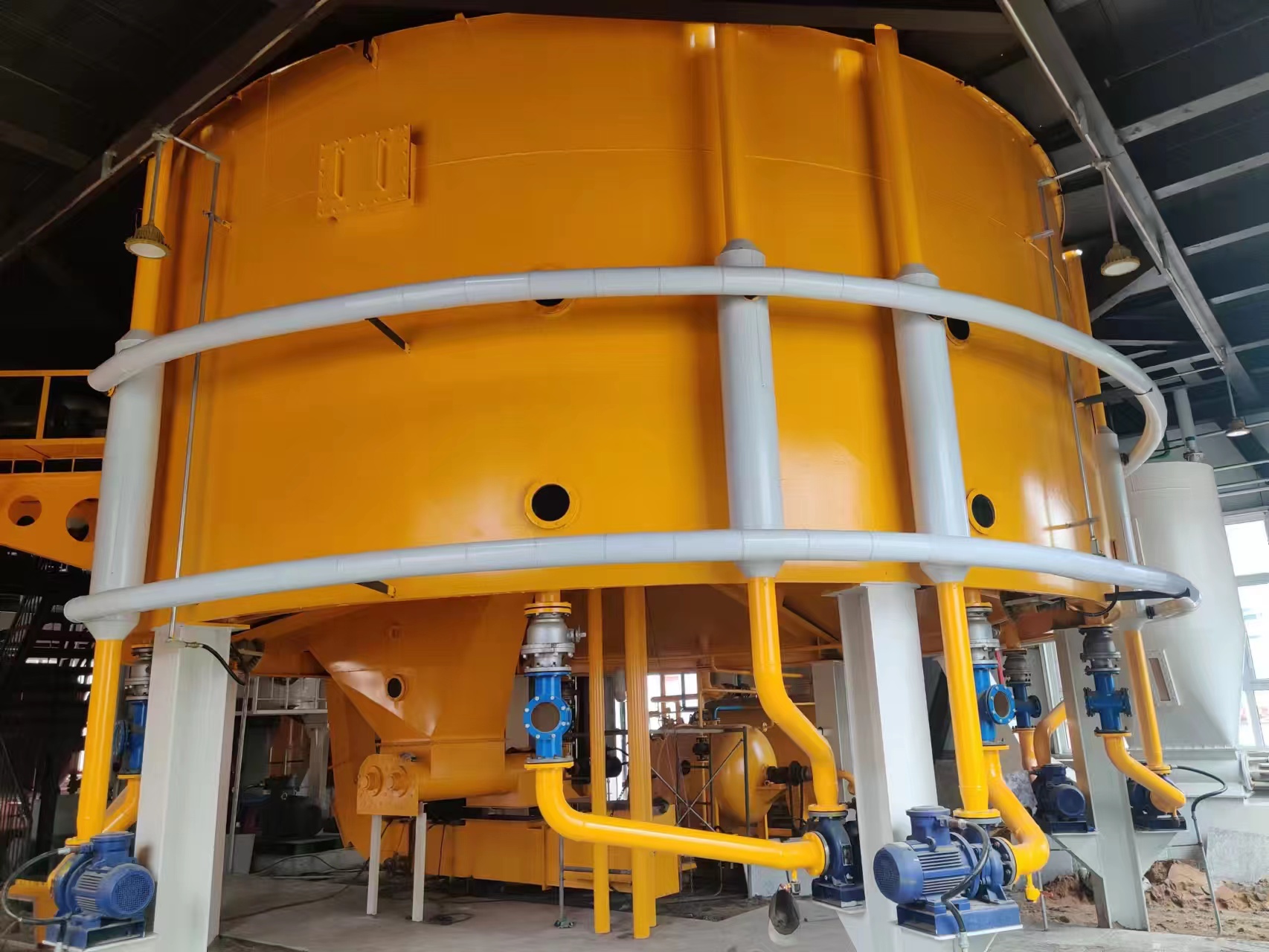
Five Key Stages
① Feeding (Entry into extraction): Moisture content should be 8%–10%, and flake thickness 0.2–0.4 mm. If the moisture content is too high, it leads to water entering the solvent, the meal clumping together, and higher residual solvent levels—any error here creates a "debt" that must be paid for in every subsequent stage of the process. ② Leaching: Temperature 50–55°C, residence time 40–60 min. Low temperatures result in high oil viscosity and slow diffusion, leading to higher residual oil content and lower concentration of the oil-solvent mixture (miscella). High temperatures lead to excessive solvent evaporation and increased operational risks.
③ Evaporation: The miscella is concentrated from 25%–30% to a higher concentration via vacuum evaporation. Low initial concentration increases the evaporation load and steam consumption; insufficient vacuum leads to higher evaporation temperatures, which causes the oil color to darken.
④ Stripping: 105–110°C, −0.06 to −0.08 MPa; reduces residual solvent in the crude oil to ≤100 ppm (internal control standards often target ≤50 ppm).
⑤ Desolventizing/Toasting (DTDC): 105–110°C; reduces residual solvent in the meal to ≤500 ppm (internal control target: 300 ppm).
Selecting an Extractor
· Batch/Tank-battery type: 5–50 t/d capacity; low investment, but operates intermittently with high solvent consumption (3–8 kg/t). Suitable for small-scale transitional operations or processing a variety of different products.
· Horizontal rotary type: 50–300 t/d capacity; the most common type in China and the preferred choice for capacities around 100 t/d.
· Loop type: 100–1000 t/d capacity; offers continuous, stable operation with minimal maintenance requirements.
· Drag-chain (chain-conveyor) type: 500–6000 t/d capacity; features the lowest solvent consumption (1.0–1.8 kg/t) but requires the highest capital investment.
For capacities ≤100 t/d, the horizontal rotary type is preferred; for 100–1000 t/d, either the horizontal rotary or loop type is suitable; the drag-chain type should only be considered for capacities ≥1000 t/d. V. Evaluating a Production Line: Five Key Metrics
· Residual oil in meal ≤1.0%: A level below 0.8% indicates thorough extraction.
· Residual solvent in meal ≤500 ppm: A food safety parameter; exceeding this limit renders the product non-compliant.
· Residual solvent in crude oil ≤100 ppm: Must meet this standard prior to the refining process.
· Miscella (oil-solvent mixture) concentration 25%–30%: Concentrations that are too low increase steam consumption during evaporation, while those that are too high lead to increased residual oil in the meal.
· Solvent consumption 1.5–3.0 kg/t: An overall performance indicator for the production facility.
Three Common Misconceptions
"The less solvent used, the better." Incorrect. A sufficient circulation volume of solvent is essential to maintain effective spraying and the necessary concentration gradient; if circulation is inadequate, residual oil levels will rise immediately. The focus should be on minimizing solvent *loss*, not on reducing the circulation volume.
"The higher the vacuum, the better." Theoretically true, but in practice, it is limited by the temperature of the cooling water. If you want to improve the vacuum, first check the condenser and the circulating water temperature—in many plants, the inability to achieve a higher vacuum is not due to a faulty pump, but rather to high water temperatures.
"The whiter the meal, the better." Incorrect. The color of the meal is primarily determined by the temperatures used during conditioning (steaming/roasting) and desolventizing. Striving for a whiter color often implies overheating, which lowers the Protein Dispersibility Index (PDI)—making the meal unacceptable to feed mills.