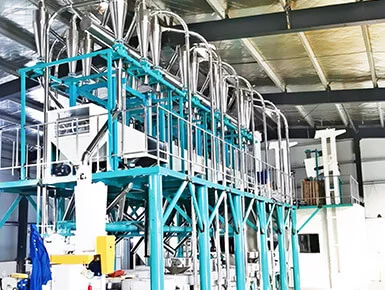
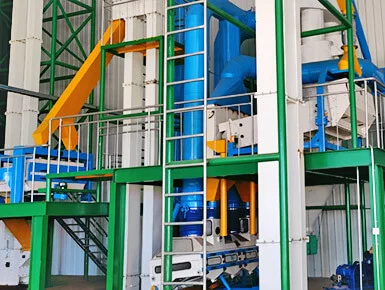
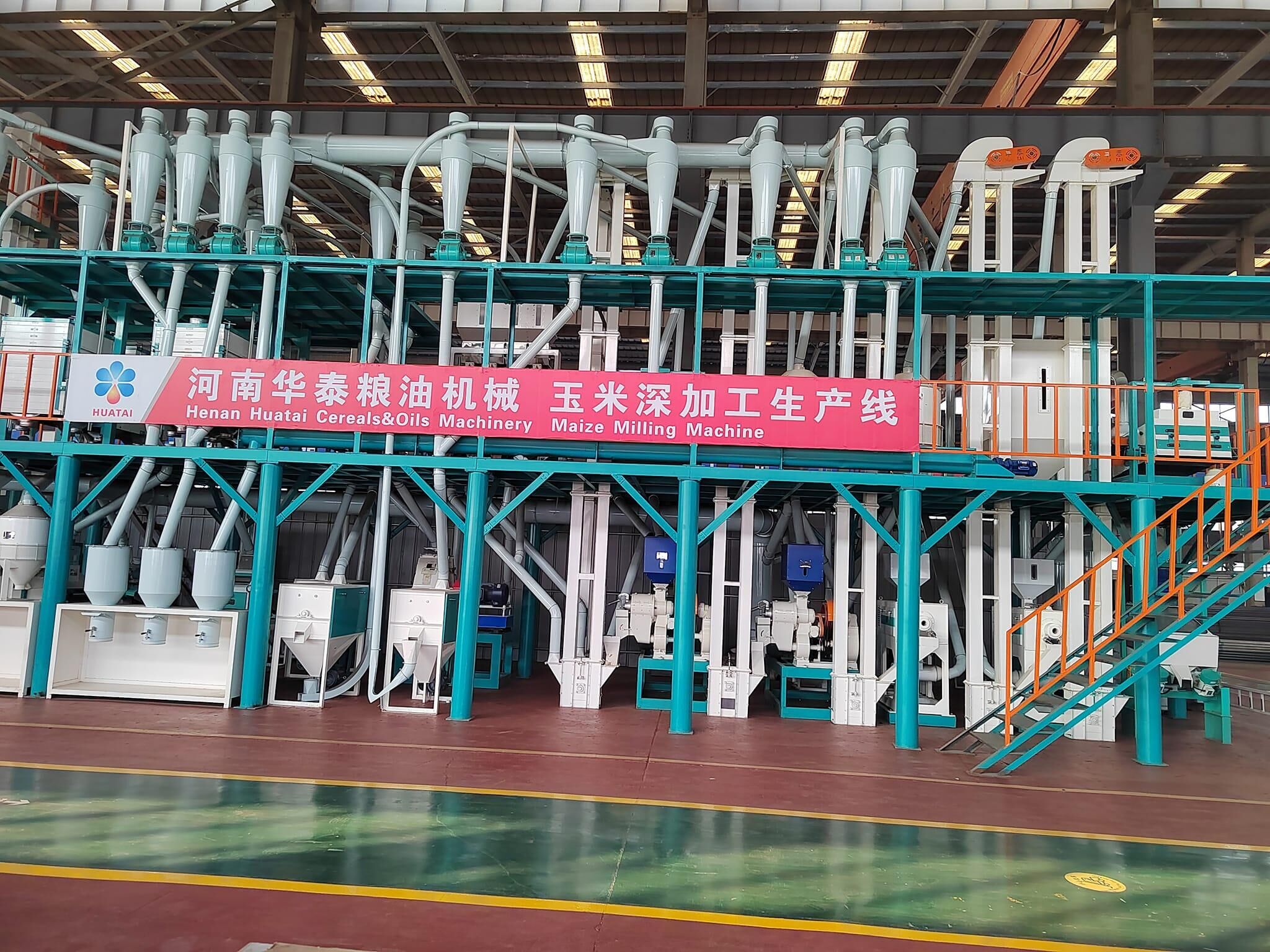
 Corn starch production
 primarily utilizes a wet process (accounting for over 95% of industrial production). Small-batch home production simplifies the process, but both share the same core principle: physically separating the starch from the protein, fiber, and germ components of corn. The specific steps are as follows:
Industrial-Scale Production Process (Wet Process)
Industrial production prioritizes high extraction rates (≥90%) and standardization, employing fully automated control. It consists of 7 core steps:
Corn Cleaning and Impurity Removal: The corn raw material undergoes a series of processes including a vibrating screen, a gravity separator, and a magnetic separator to remove impurities: dust and small particles are sieved out; stones and silt are separated; and metal debris is adsorbed. The purity of the cleaned corn must reach 99.5% or higher to prevent impurities from damaging equipment and affecting starch quality.
Soaking and Softening: The cleaned corn is placed in a stainless steel soaking tank, and a 0.2%-0.3% sulfurous acid solution (at approximately 50℃) is added. The mixture is soaked for 40-60 hours. Function: Sulfurous acid inhibits microbial growth, dissolves pectin in corn husks, and softens corn kernels; it also breaks down the binding of protein and starch, facilitating subsequent separation.
Key Indicator: After soaking, the corn has a moisture content of 40%-45%, making it easily crushable by hand.
Coarse Crushing and Germ Separation: The softened corn is coarsely crushed into 4-6 pieces using a toothed roller crusher. During crushing, the germ detaches from the corn.
The crushed mixture is fed into a germ separation tank. Utilizing the density difference between the germ (low density) and the corn kernels (high density), the germ is separated by water flotation—the germ floats on the surface and is collected for corn oil extraction.
Fine Grinding: The corn paste (containing starch, protein, and fiber) after germ separation is fed into a colloid mill or needle mill for further grinding to a particle size ≤100μm, allowing starch granules to be fully released from the cells.
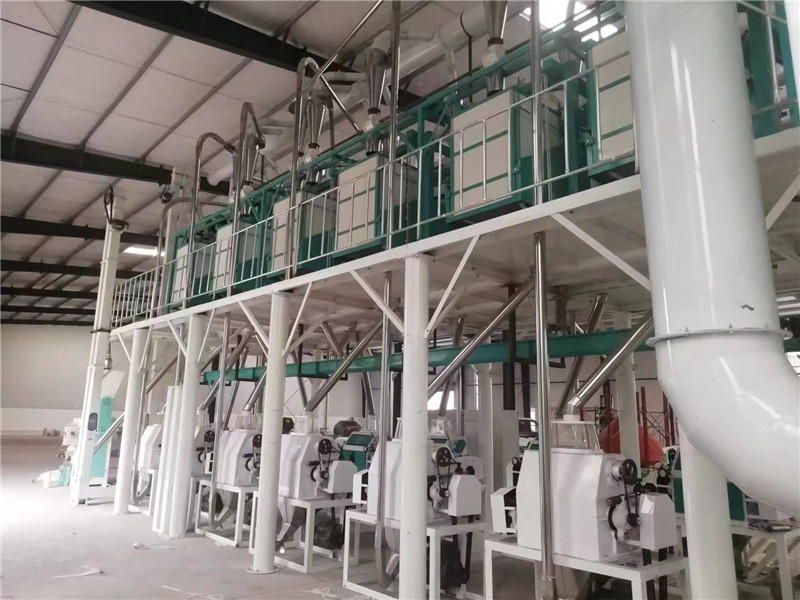
Starch Screening and Refining
Screening: The ground starch slurry is subjected to multi-stage screening using centrifugal sieves and hydrocyclones to separate coarse fibers (used for feed production), resulting in an emulsion containing starch and protein.
Protein Separation: The starch slurry enters a disc centrifuge, where centrifugal force separates the less dense protein (gluten). The protein is then dried to produce corn gluten meal (feed or food additive).
Washing and Refining: The starch slurry is repeatedly washed using a hydrocyclone washing system (12-18 stages) to remove residual soluble sugars and proteins, increasing the starch purity to over 99%.
Dehydration and Drying: The refined starch slurry (approximately 60% moisture content) is fed into a three-legged centrifuge or a horizontal screw centrifuge to dehydrate to a wet starch content of 20%-22%.
Wet starch is rapidly dried using an airflow dryer (temperature 120-150℃) to obtain dry starch with a moisture content of 12%-14%. Strict temperature control is required during the drying process to prevent starch gelatinization.
Sieving and Packaging: The dry starch is graded by a vibrating screen (separated into different specifications according to particle size), then metered and packaged to obtain the finished corn starch.
Industrial Production: It is crucial to control the soaking temperature and sulfite concentration. Excessive temperature will cause starch gelatinization, while excessive concentration will affect starch quality. Environmentally, a wastewater treatment system is necessary; the soaking water can be used to recover protein, achieving resource utilization.
Professional
starch processing machinery equipment manufacturer, choose Huatai Group.