Introduction
Refined corn oil is rich in polyunsaturated fatty acids, vitamin E, and natural plant sterols. It commands strong consumer trust and premium pricing.
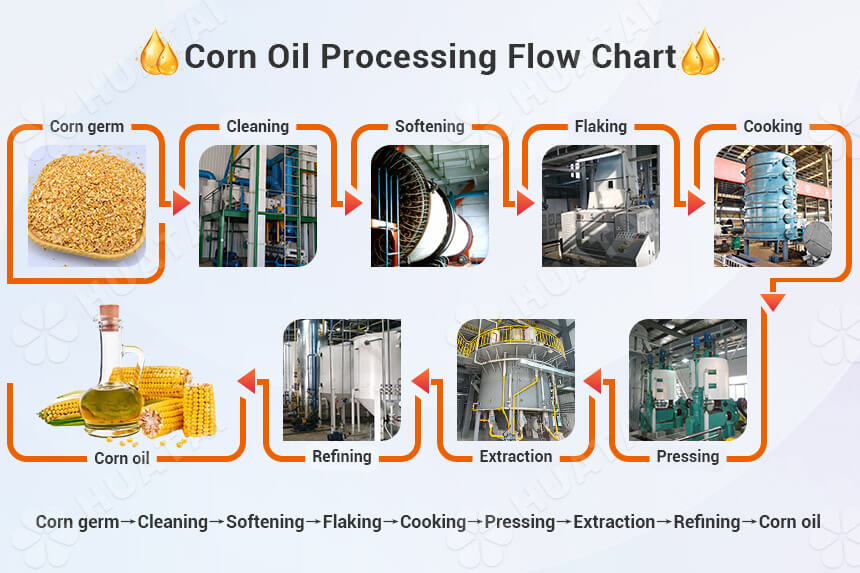
This article walks you through every step of corn oil refining process, main equipment, and shows you how to set up a corn oil refinery plant that delivers consistent, high-quality results.
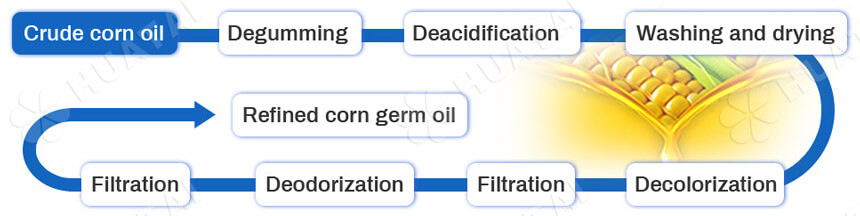
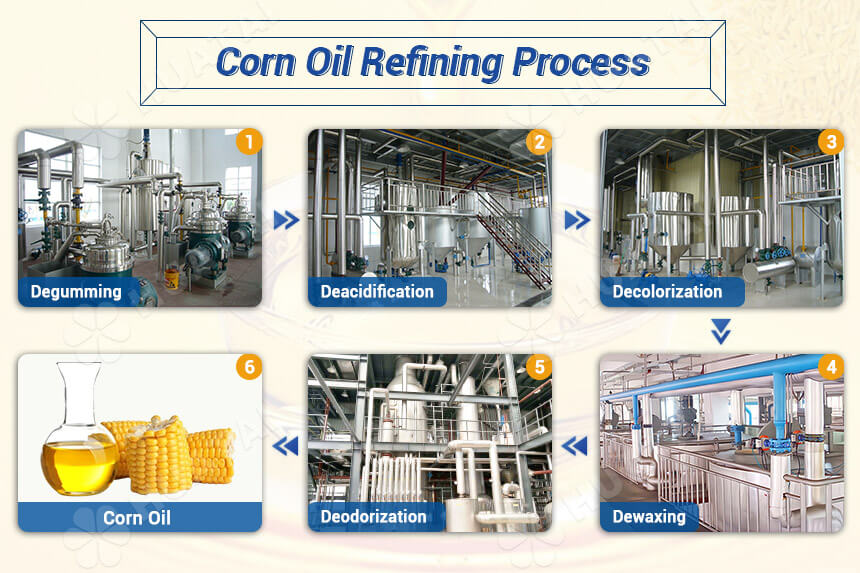
Five Stages of Corn Oil Refining Process
Corn crude oil contains phospholipids, free fatty acids, pigments, waxes, and off-flavor compounds. Refining removes these substances while maximizing the retention of natural nutrients such as vitamin E and phytosterols.

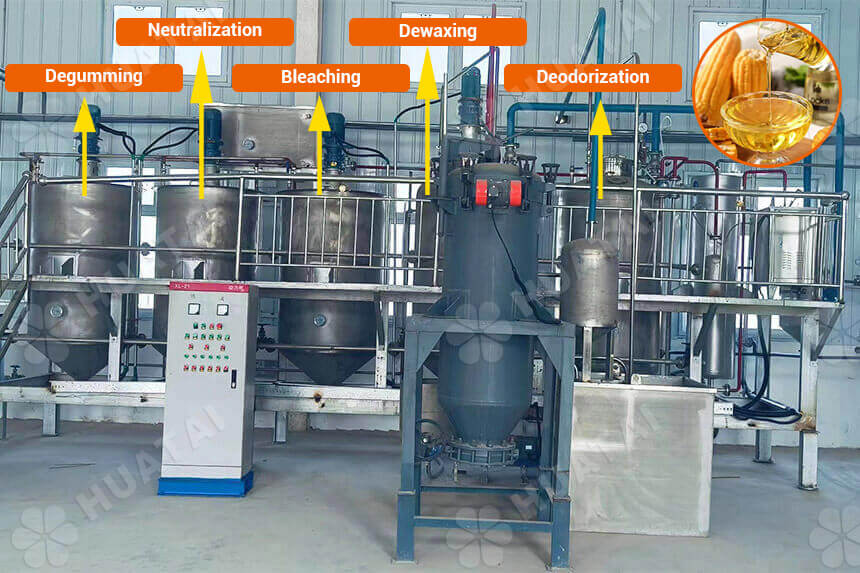
Stage 1: Degumming in Corn Oil Refinery
Degumming removes phospholipids, proteins, and mucilaginous substances from crude corn oil. If you don't remove these components thoroughly, they will cause oil to cloudy and reduce its storage stability.
You can choose between two degumming methods:
- Water degumming: This method exploits the hydrophilic nature of phospholipids — water causes them to swell and form micelles that separate from the oil. However, it shows limited effectiveness against non-hydratable phospholipids (such as beta-phospholipids).
- Acid degumming: Add food-grade phosphoric acid or citric acid to crude oil. This converts non-hydratable phospholipids into hydratable forms and chelates trace metal elements, benefiting the subsequent bleaching stage.
Henan Huatai Group has designed a continuous hydration degumming system by precisely controlling water addition (5%-10% of oil volume) and temperature (75-80℃) to ensure optimal colloid aggregation.
Stage 2: Neutralization in Corn Oil Refinery
Free fatty acids in corn oil affect corn oil's flavor and stability, so must remove them. You can use two neutralization methods:
Chemical Alkali Refining (Alkali Neutralization)
This is the most commonly used method for refining corn oil. It uses NaOH to neutralize free fatty acids, producing soapstock, then filters out. The soapstock has strong adsorption capacity and simultaneously removes some pigments and impurities.
Physical Refining
This method distills free fatty acids under high-temperature, high-vacuum conditions. Physical refining has higher yields and produces less pollution, but it requires very high pre-treatment quality of crude corn oil. This method for oils with particularly high acid values or as a supplement to chemical alkali refining.
Stage 3: Bleaching in Corn Oil Refinery
Bleaching does more than remove natural pigments like lutein and carotene—it also removes residual soap particles, phospholipids, and trace metals. The most common method uses adsorbent bleaching.
Based on the crude oil specifications, mix different types of bleaching clay (activity: 120-150) and add citric acid for pre-bleaching to reduce the amount of bleaching agent needed.
Henan Huatai Group uses vertical or horizontal bleaching towers (residual pressure 2.5-3.5 kPa). This not only achieves efficient bleaching but also prevents oil oxidation at high temperatures. By controlling temperature (100-120℃) and time (20-30 minutes), get excellent bleaching results while minimizing damage to heat-sensitive nutrients like tocopherols.

Stage 4: Dewaxing in Corn Oil Refinery
Corn oil contains small amounts of wax (esters formed from higher fatty acids and fatty alcohols). These waxes crystallize and precipitate at low temperatures, causing the oil to become cloudy and reducing its fluidity.
Dewaxing controls cooling to crystallize the waxes, then filters them out to ensure the finished oil keeps clear and transparent even in refrigerated or cold environments.
In a crystallization tank with slow-speed stirring, slowly cool the oil from approximately 50℃ to 5-10℃ (controlling cooling rate at 5-10℃/hour). Then keep this temperature for 6-12 hours to "grow crystals," allowing tiny wax crystals to gradually increase in size. After that, separate wax using a plate-and-frame filter or enclosed leaf filter.
Stage 5: Deodorization in Corn Oil Refinery
Deodorization is the final stage in the corn oil refinery. It removes off-flavors, residual free fatty acids and volatile compounds such as aldehydes and ketones, while further decomposing heat-sensitive pigments. It achieve through high-temperature vacuum steam stripping.
This process uses difference in volatility between triglycerides and odorous substances. Directly inject steam under high temperature and high vacuum to take away odor components.
Traditional deodorization processes cause significant losses of vitamin E and phytosterols, and may produce harmful substances like trans fatty acids and 3-monochloropropanediol esters (3-MCPDEs).
Henan Huatai Group has developed a new combined deodorization tower that uses a low-temperature, short-time deodorization process (temperature 235-245℃, time 60-80 minutes, absolute vacuum <400 Pa). This effectively removes off-flavors while ensuring retention rates of phytosterols and tocopherols both exceed 80%, and greatly reduces trans fatty acid formation.
What Equipments Are Used in Corn Oil Refining Process?
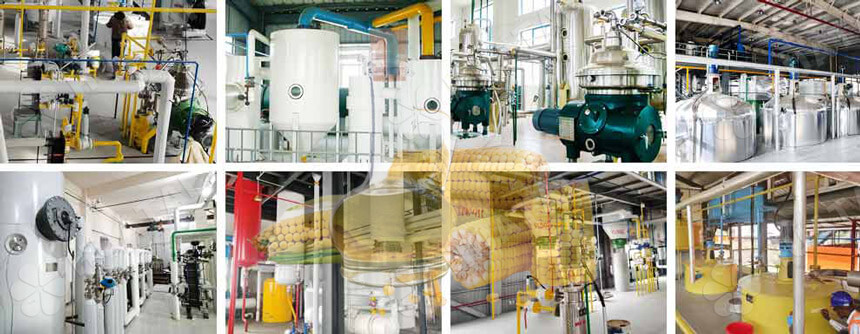
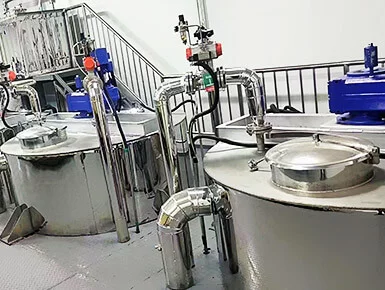
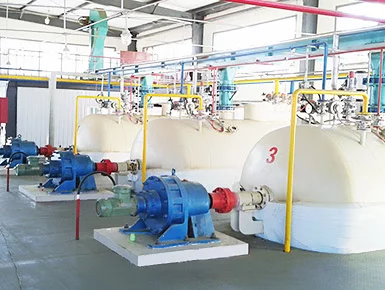
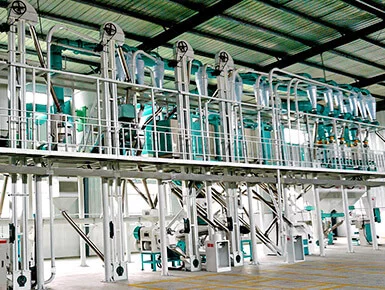
A complete corn oil refining production line is a continuous automated integrated system, includes the following main equipment:
| Process Section |
Core Equipment |
Core Functions |
| Pre-treatment |
Plate/shell-and-tube heat exchanger, crude oil filter, plate centrifuge |
Rapidly heat crude corn oil to specific temperature; parallel dual-cylinder filters thoroughly remove mechanical impurities, reducing centrifuge discharge frequency and lowering oil loss; efficiently separate hydrated gums from oil. |
| Neutralization/Deacidification |
Acid/alkali mixer, reaction tank, disc centrifuge, plate heat exchanger |
Ensures uniform contact between chemical reagents and oil droplets; provides enough reaction time to complete neutralization; rapidly separates soapstock from clean oil and wash wastewater from clean oil; uses waste heat recovery technology to reduce system energy consumption. |
| Bleaching/Decolorization |
Decolorization tower, clay dosing feeder, leaf filter |
Adsorbs pigments and impurities under vacuum to prevent corn oil oxidation; controls clay addition to reduce production costs; efficiently separates spent clay to minimize residual oil content. |
| Dewaxing |
Crystallization tank, crystal growing tank, closed leaf filter/plate-and-frame filter, chilled water system, filter aid addition tank |
Crystallize wax; grow crystals; filter crystals; provide stable cooling source to ensure minimal temperature fluctuation during crystallization and avoid microcrystal formation. |
| Deodorization |
Deodorization tower (plate/packing structure), fatty acid trap, four-stage steam jet pump |
Enables efficient oil-vapor contact to distill free fatty acids and odorants; condense and recover distilled fatty acids as byproducts; provide necessary high vacuum for deodorization tower, ensuring deodorization effectiveness. |
| Auxiliary System |
Thermal oil furnace/boiler, DCS control system |
Provide stable heat source; distributed control system achieves full automation from crude corn oil feeding to finished oil filling, ensuring stability. |
What Factors Affect Corn Oil Refinery Effectiveness?
- Crude corn oil quality: The freshness of corn germ directly affects the acid value and peroxide value of crude oil. Using fresh, high-purity corn germ reduce refining losses, produce finished oil with lighter color, and slow color reversion.
- Temperature and time: Excessively high alkali refining temperature saponifies neutral oil; insufficient bleaching temperature leads to poor adsorption; excessive deodorization time damage nutrients.
- Vacuum level: Both bleaching and deodorization must occur under high vacuum. If vacuum is insufficient, corn oil rapidly oxidizes and deteriorates at high temperature, causing darker color and reduce flavor.
- Chemical reagents and additives: Precise calculations are required for phosphoric acid dosage, alkali solution concentration and dosage, bleaching clay activity and dosage. Too few results in incomplete refining; too much increases costs and oil losses.
- Centrifuge separation efficiency: This determines the neutral oil content in soapstock and wastewater, directly affecting refining yield.
- Mixer mixing effectiveness: Whether oil mixes uniformly with acid and alkali determines whether reaction completes thoroughly.
- Filtering equipment performance: Using fully automatic closed leaf filter or plate-and-frame filter, can control residual oil rate in filter cakes less than 20%.
- Automation control level: A stable, precise automation system effectively prevents quality variations caused by manual operation fluctuations.

How to Setup a Corn Oil Refinery Plant?
Step 1: Determine Scale and Conduct Feasibility Study
Determine scale: Based on raw material supply (corn resources) and sales radius, determine daily processing capacity. For example, a corn oil processing plant project producing 200,000 tons annually might require a total investment of approximately $35 million and occupy about 60,000 square meters.
Design business plan: Huatai Intelligent Equipment Group's professional team can help you conduct investment return analysis, including equipment investment, plant construction, operating costs, and expected returns, ensuring project is economically feasible.
Step 2: Plan Factory Area and Design Workshop
Layout rationality: Plan factory area to ensure short, smooth logistics between raw material warehouse, pre-treatment workshop, refining workshop, filling workshop, boiler room, and wastewater treatment station.
Design process flow diagram: Based on your production capacity and product positioning, we customize a complete corn oil refining process flow from crude oil to finished oil tailored to your needs.
Step 3: Equipment Selection and Customized Manufacturing
Determine core equipment: According to process requirements, select matching brands and models of core components like centrifuge, filter, and heat exchanger.
Manufacture equipment: Henan Huatai Group has 38 years of manufacturing experience and can custom-produce key equipment like deodorization tower, bleaching tower, and storage tank according to design drawings, ensuring materials, welding, and insulation processes meet the highest standards.
Step 4: Civil Construction and Equipment Installation
Infrastructure: Complete construction of workshop buildings, warehouses, office buildings, electrical substations, and other infrastructure.
Professional installation: Huatai Group's experienced installation engineers provide on-site guidance or implementation, completing everything from positioning individual equipment to connecting complete process piping and electrical circuits, ensuring every weld and every flange meets pressure and sanitation standards.
Step 5: Commissioning and Personnel Training
Commissioning: First, verify equipment rotation direction and pipeline sealing; then introduce raw materials and gradually adjust process parameters until you produce qualified finished corn oil that meets national standards.
Comprehensive training: We not only provide equipment operation manuals but also on-site practical training for your employees, covering process principles, operating procedures, common troubleshooting, and routine maintenance.
Step 6: Production Start-up and Long-term Technical Support
Stable operation: Transfer the production line for official commercial operation.
Lifetime service: Huatai Intelligent Equipment Group provides long-term spare parts supply, technical upgrades, and process consulting services, ensuring your corn oil refinery maintains technological leadership in future market competition.

Conclusion
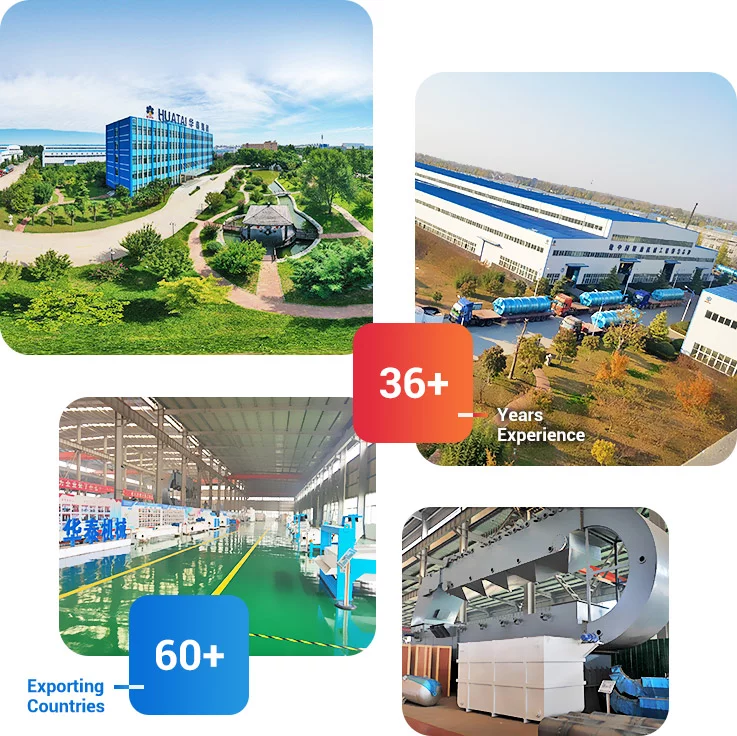
With over 38 years of experience, Henan Huatai Intelligent Equipment Group has helped clients worldwide establish profitable corn oil refining plants. From initial feasibility studies to lifetime technical support, we provide complete turnkey solutions customized to your production scale and market requirements.
Whether you're processing 10 tons or 5000 tons daily, our automated systems ensure consistent quality, maximize your return on investment.
Contact Henan Huatai Group today for a free consultation and customized corn oil refinery solution. Our engineering team will analyze your specific requirements, design an optimal process flow, and provide detailed investment analysis to help you make informed decisions.
References: