Corn flour is rich in nutrients and comes in various colors, including yellow and white.
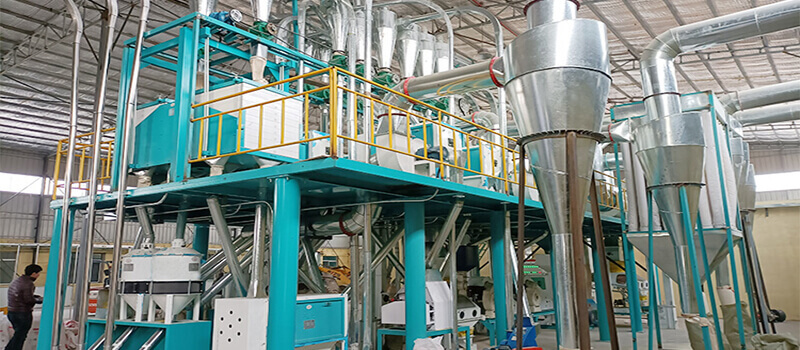
Corn flour processing involves using corn as raw material to produce corn flour and corn grits of various finenesses, and to extract corn germ and bran.
The main processing steps for corn flour include receiving raw grains, drying raw grains, storing raw grains, cleaning raw grains, moistening corn, cleaning cleaned corn, peeling, degerming, grinding and grading, warehousing, packaging, and distribution. The processing utilizes automated production control. Areas requiring significant manual labor, such as packaging and warehousing, are increasingly being handled by fully automated packaging machines and robotic palletizing equipment. In particular, advanced peeling and degerming processes improve equipment utilization, effectively saving on equipment investment and factory space, and significantly increasing the economic efficiency of the processing plant.
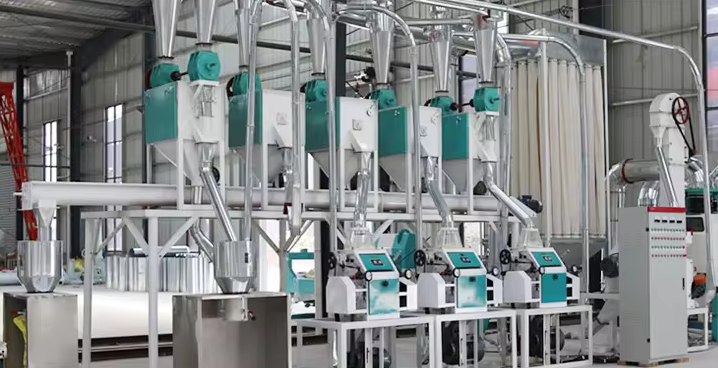
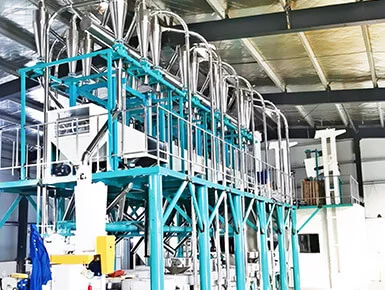
Flour processing involves using wheat as raw material to produce various grades of flour, develop various specialty flours, and extract wheat germ and bran. Specialty flours are made from special varieties of wheat or, depending on the intended use, are blended with improvers to create higher-grade flours. Specialty flours are diverse in type, with precise formulations and stable quality. With social development and improved living standards, flour processing is moving towards large-scale operations, diversified flour types, and intelligent production, further upgrading the industry.
Wheat flour processing mainly includes stages such as raw grain receiving, raw grain storage, raw wheat cleaning, wheat conditioning, clean wheat, grinding, grading, sieving, flour warehousing, flour blending, flour packaging, and distribution; the processing utilizes PLC automation control. Stages that previously relied heavily on workers are gradually being replaced by fully automated packaging machines and robotic palletizing.
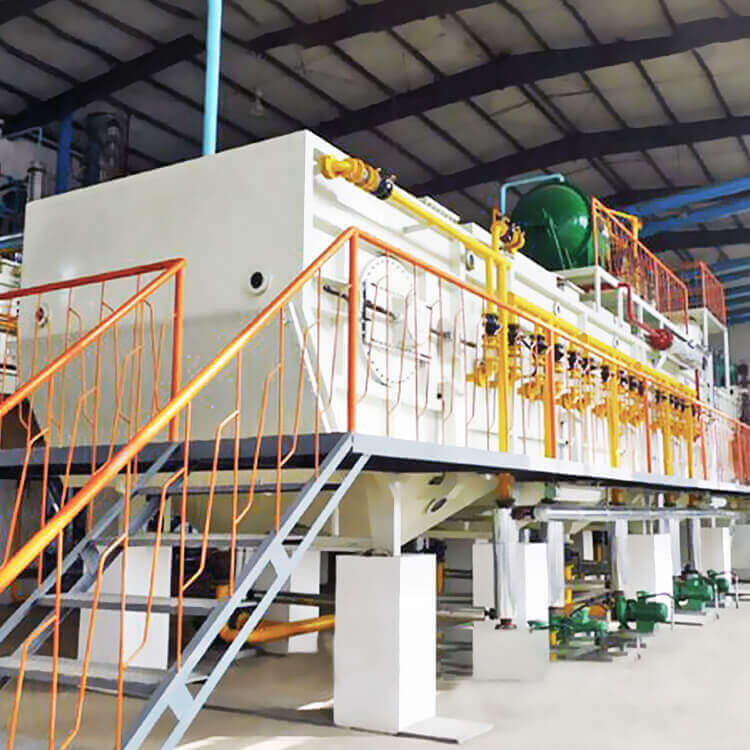
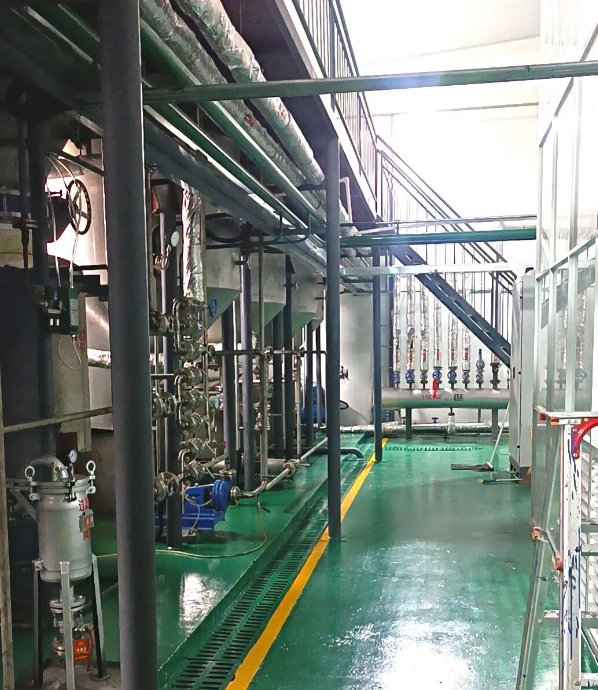
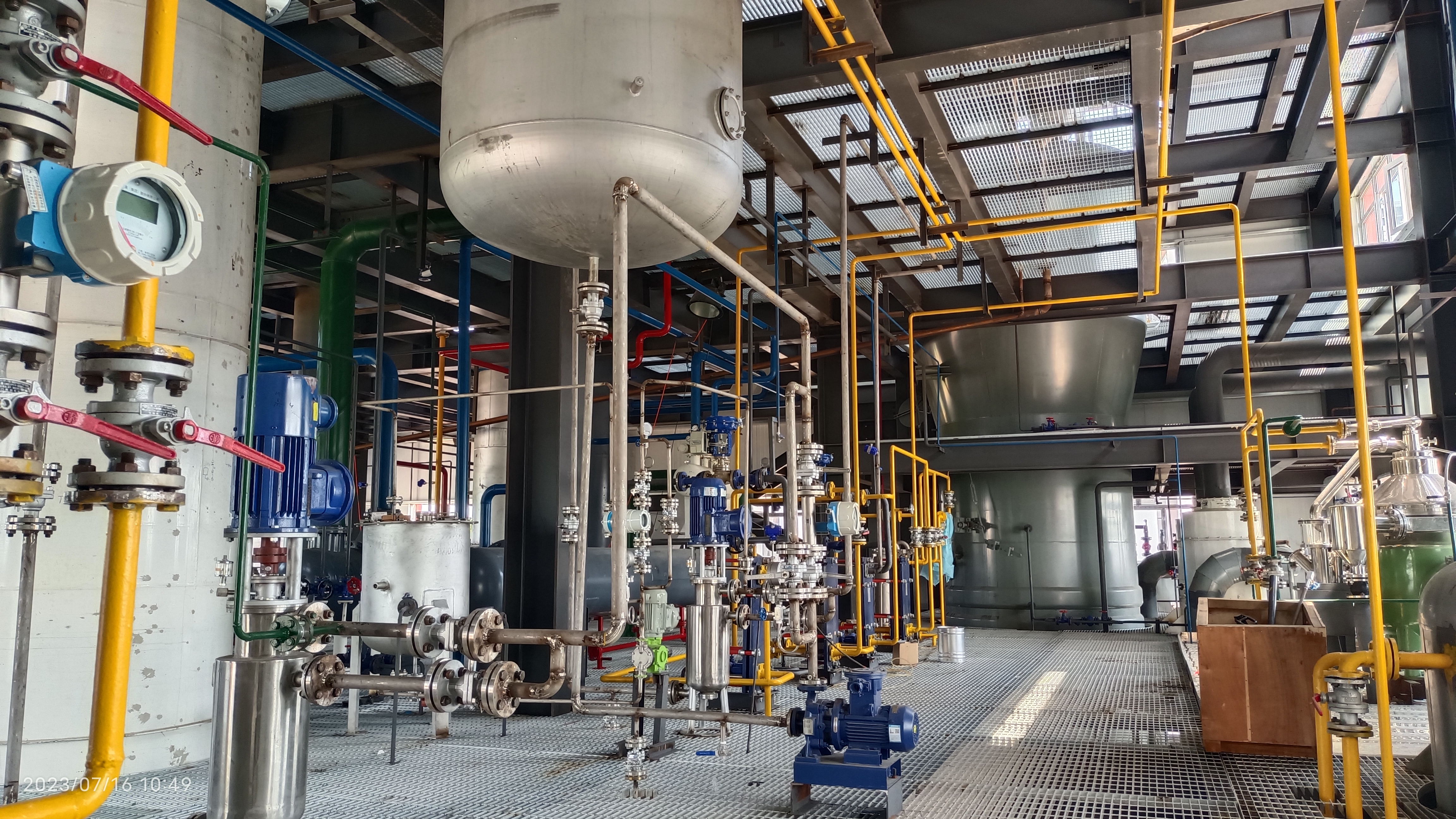
Corn starch production lines utilize a closed-loop, counter-current wet milling method. This production line is scientifically designed, technologically advanced, clean in its process, boasts high equipment utilization, eliminates material retention, minimizes the number of tanks, extends effective operating time, achieves high corn component extraction rates, shortens the production process, reduces material input-output time, and results in high product yield and quality. It is computer-controlled. The entire corn starch production process is a continuous, countercurrent, closed-loop, balanced, closed, and thermal physical-mechanical processing process (only during corn soaking does a certain degree of biochemical reaction occur).
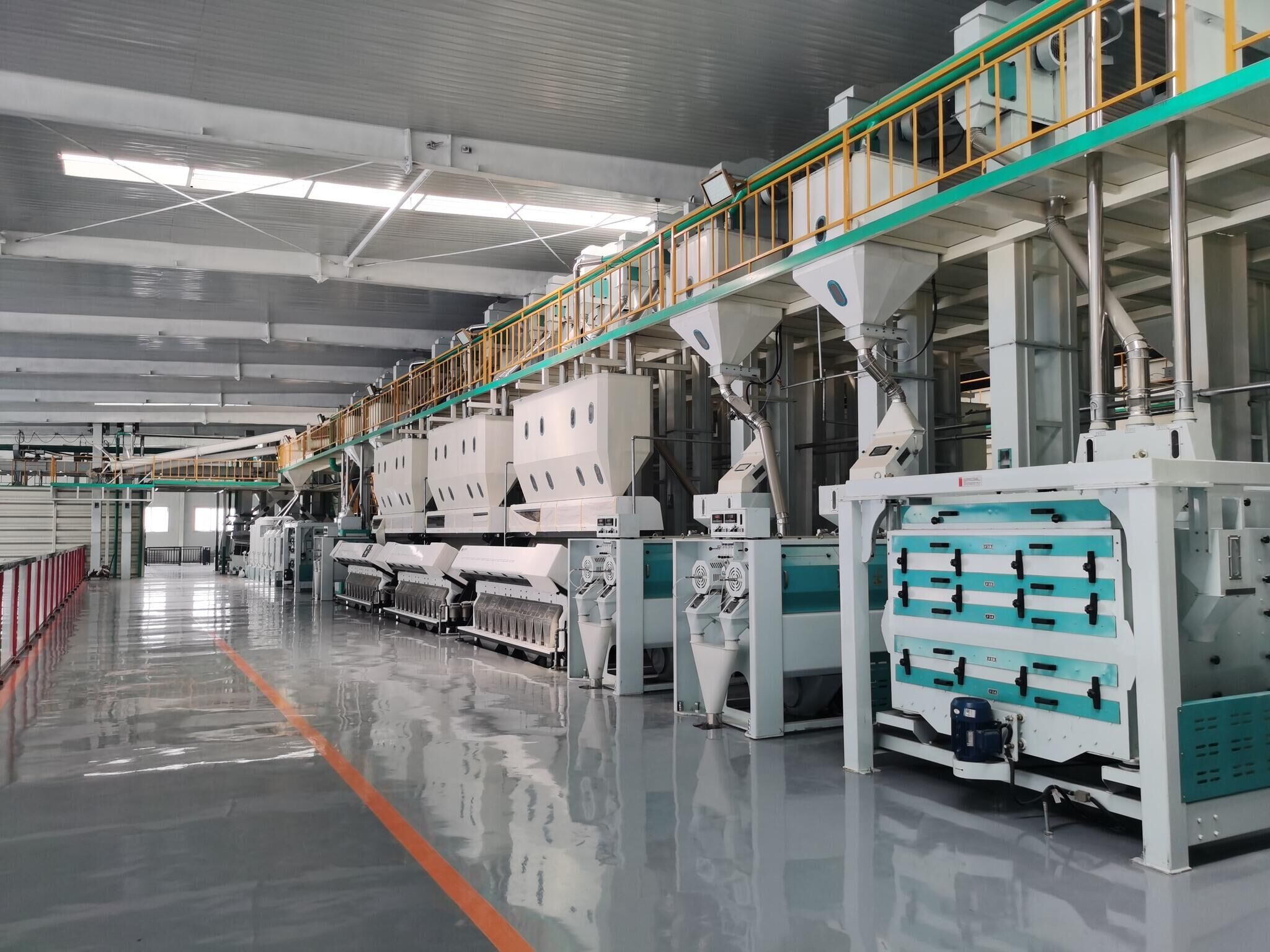
The entire
corn starch production process can be divided into four closed-loop countercurrent stages.
(1) First closed-loop countercurrent stage: Corn soaking, including soaking solution preparation, corn desanding and feeding, corn soaking, post-soaking corn conveying, and corn slurry evaporation and concentration.
(2) Second closed-loop countercurrent stage: Corn crushing, germ and fiber production, including corn crushing, germ separation, germ washing and dehydration, fiber washing and screening, and fiber dehydration.
(3) Third closed-loop countercurrent stage: Main separation and starch production, including protein separation and starch washing and refining.
(4) Fourth closed-loop countercurrent stage: Gluten production and process water, including gluten concentration and dehydration.
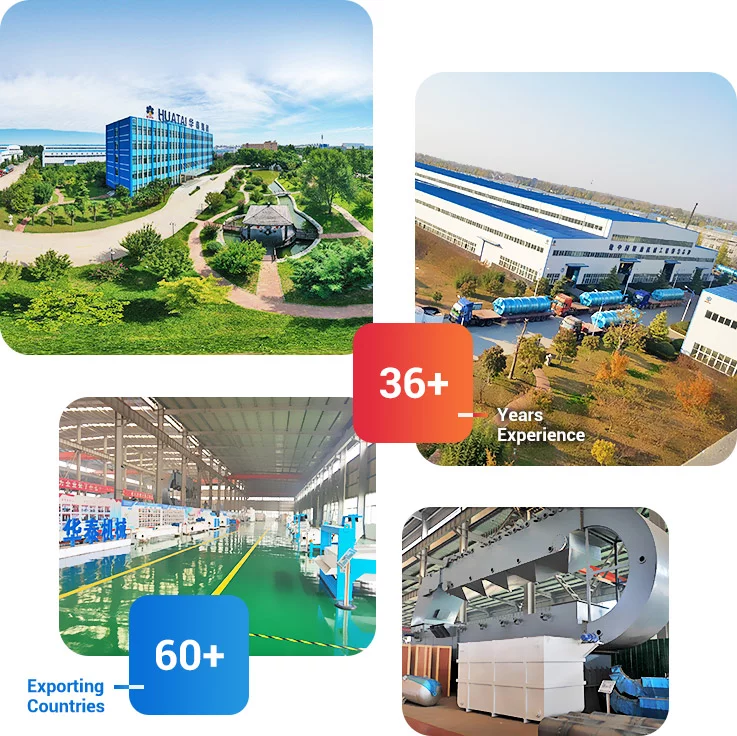
Henan Huatai Group provides various grain processing equipment, grain milling machinery, rice milling machines, and miscellaneous grain milling equipment. We can supply a complete line and milling plant with a capacity of 30 tons to 1500 tons.