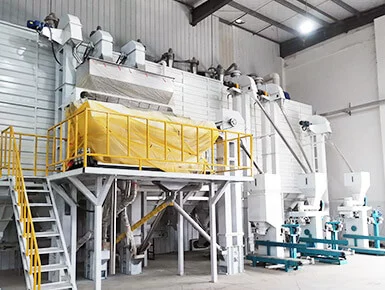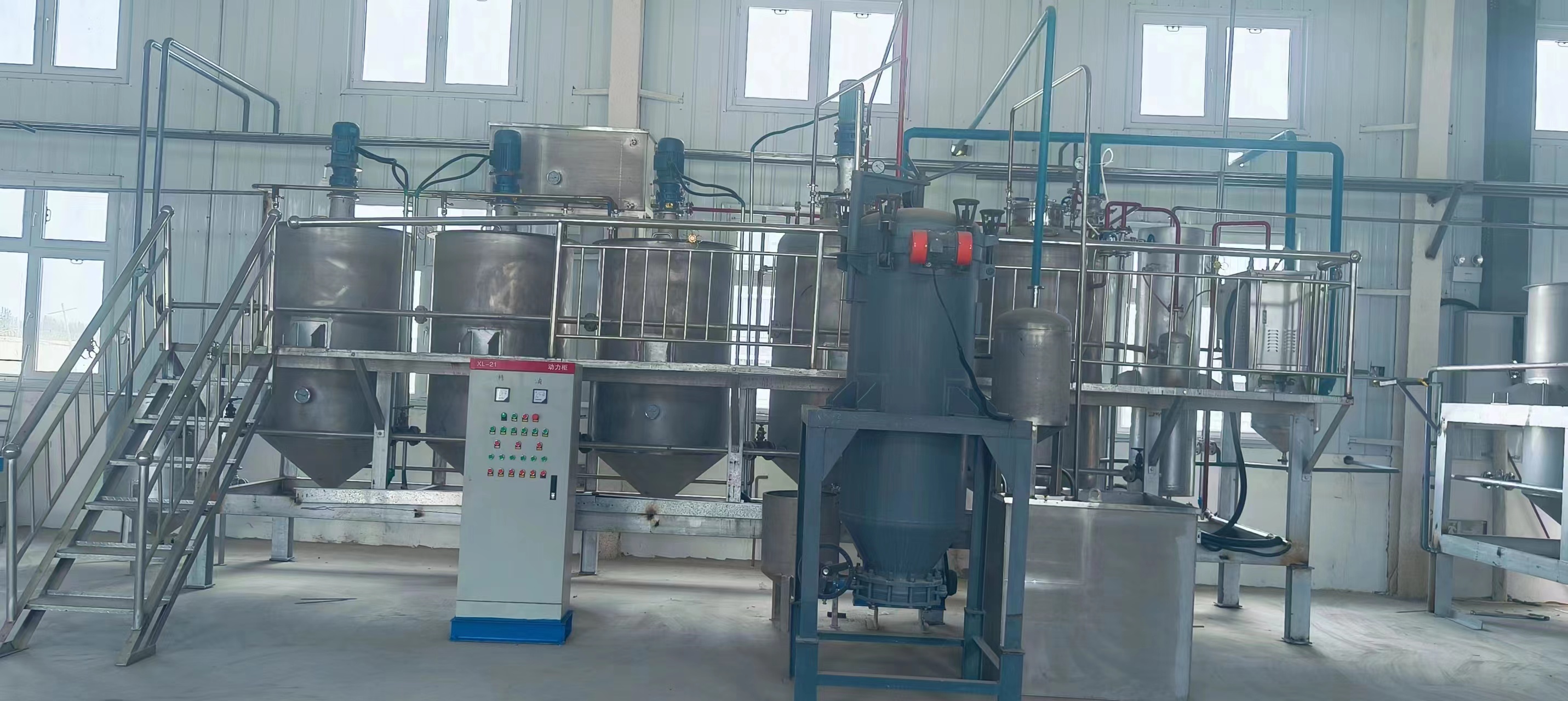
While the core refining sequence—degumming, bleaching, and deodorizing—is the same, half of the equipment used for vegetable oil must be replaced when processing fish oil.
In vegetable oil refining, if the deodorization temperature is 5°C too high, the worst outcome is typically a slightly darker color. In fish oil refining, however, a 5°C increase can cause the loss of EPA and DHA through evaporation, and may even trigger a rebound in the peroxide value.
Raw Materials: Oxidation Begins Upon Arrival
For crude vegetable oil, an acid value of 1–4 is considered normal, and the oil can generally be stored for a few days without significant issues. This is not the case for fish oil.
According to the standard (SC/T 3502-2016), the requirements for crude fish oil are: acid value ≤ 8.0, moisture ≤ 0.3%, impurities ≤ 0.5%, peroxide value ≤ 1.2 g/100g, p-anisidine value ≤ 25, and an arrival temperature of ≥ 30°C.
Note the last requirement: ≥ 30°C. At room temperature, fish oil is semi-solid; if the temperature is too low, it cannot be pumped, and flow through the pipes is obstructed. Yet, higher temperatures accelerate oxidation.
The reality on the supply side is that raw fish oil exhibits far greater variability than vegetable oil. Acid values and peroxide values can differ by as much as 100% depending on the catch, the season, or the origin. This is why the refining protocol incorporates both centrifugal degumming and sedimentation degumming—using centrifugal separation for high-quality raw material and sedimentation for lower-quality (dirtier) material—to hedge against uncertainty.
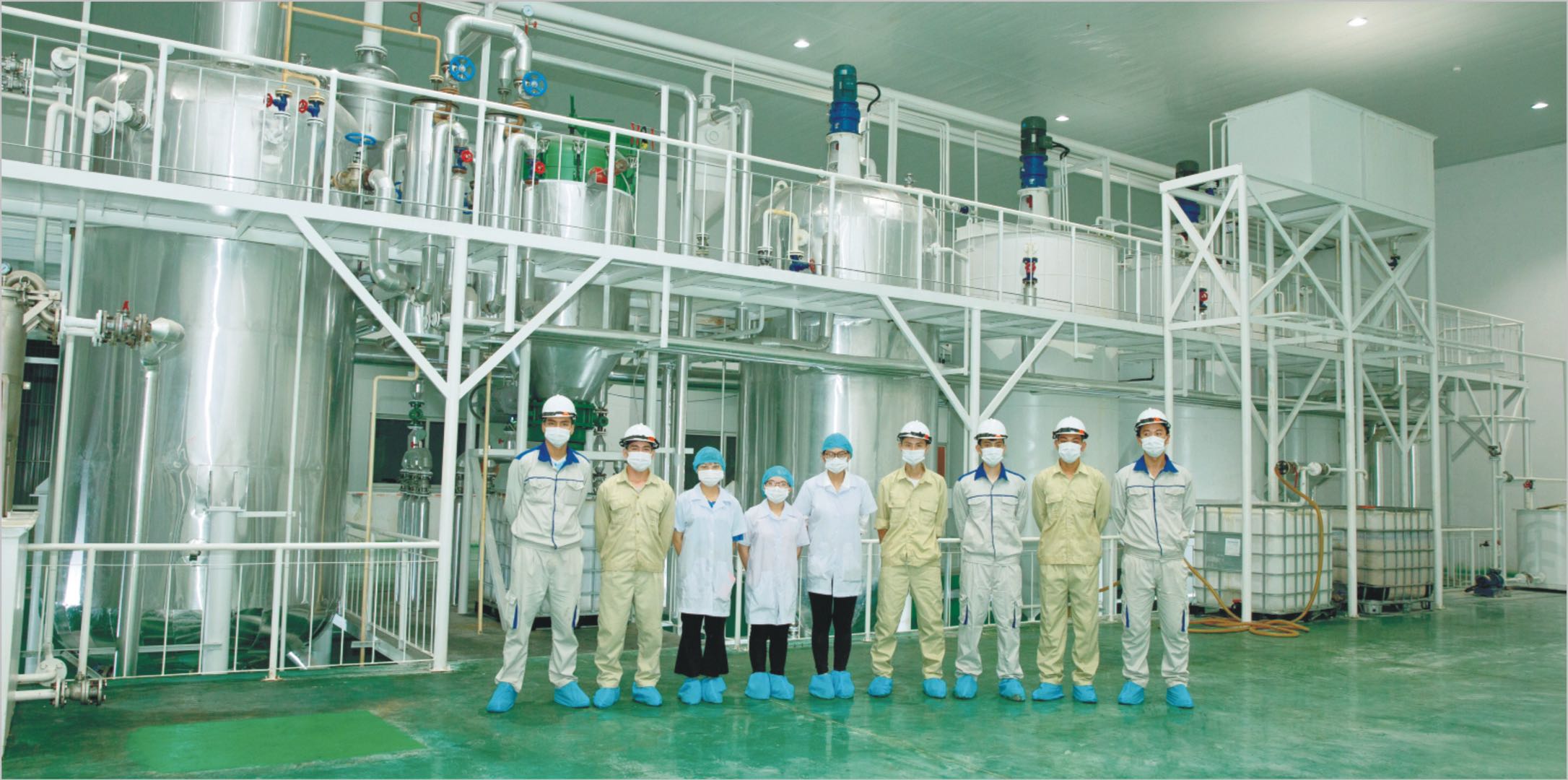
Deodorization: Relying on Vacuum, Not Temperature
This is a key distinction between fish oil and vegetable oil.
In vegetable oil processing, the deodorization strategy often involves "trading temperature for vacuum." If a high vacuum cannot be achieved (for instance, if the residual pressure only reaches 1,000 Pa), the temperature is raised—sometimes as high as 250°C—to compensate, sacrificing some product quality to ensure the desired smoke point.
This approach does not work for fish oil. EPA (20:5) and DHA (22:6) each contain 5 to 6 double bonds. For every 10 °C increase in temperature, the rates of oxidation and polymerization roughly double. Furthermore, high temperatures cause these compounds to vaporize as "light components," leading to a direct drop in yield. Consequently, the approach for fish oil must be reversed: using a vacuum to compensate for temperature.
Material: 316L stainless steel is a "must."
While production lines for vegetable oils often utilize carbon steel and 304 stainless steel, the sections that come into contact with fish oil are almost exclusively made of 316L.
This is not a matter of "premium" quality, but rather two chemical realities
1. Fatty acid corrosion: Fish oil has a high content of free fatty acids, which cause significantly more corrosion to carbon steel and 304 stainless steel under high-temperature, high-vacuum conditions than vegetable oils do.
2. Metal-ion catalysis: Iron and copper ions act as oxidation catalysts even at concentrations as low as a few ppm. If the equipment begins to rust, the oil will develop a bitter, rancid taste—a phenomenon driven not by microorganisms, but by metal-catalyzed oxidation.
Dewaxing
This is a core process, not an auxiliary stage.
In vegetable oil production, dewaxing is "optional"—it is required for sunflower seed oil, rice bran oil, and corn oil, but can be omitted for soybean or rapeseed oil.
Fish oil is different: it contains high levels of saturated fats and waxes. Without dewaxing, the finished product would turn into a thick, pasty mass at low temperatures. Therefore, this process design includes dedicated crystallization and maturation tanks (two units, Φ2400×5000), a separate refrigeration unit (−5 °C), an independent chamber filter press (150 m²), and a standalone Distributed Control System (DCS).