Introduction
The palm oil deodorization process is a key step in the refining process. Its core principle is steam distillation under high-temperature and high-vacuum conditions to remove volatile substances such as free fatty acids, aldehydes, and ketones that affect flavor, odor, and stability.
In this guide, I will detail each step in the palm oil deodorization process, factors, and main machine used.
What Is Palm Oil Deodorization Process?
The palm oil deodorization process is a physical refining process. It uses volatility differences between odour-causing substances and the oil itself. The process works by introducing direct steam under high temperature and high vacuum conditions to remove impurities and get pure, refined oil. The detailed steps are as follows: (Related Post: Palm oil refining process flow chart >>)

Step 1: Deaeration and Preheating
Before preheating, crude palm oil enters deaerator. Under vacuum conditions, this equipment removes dissolved oxygen and air from oil. This prevents the oil from oxidation, polymerization, and other reactions during after high-temperature stages, helping control peroxide value increases and color reversion.
After deaeration, the palm oil (60-80°C) enters a plate or shell-and-tube heat economizer. Indirect heating (using steam or thermal oil) raises oil temperature to about 90-120°C.
Preheating removes trace moisture remaining in oil, preventing this moisture from causing oil hydrolysis during after high-temperature stages, which would generate free fatty acids and reduce oil quality.
Step 2: Heating
A transfer pump moves the dehydrated and preheated oil into the main body of deodorization tower. Inside tower, heat exchangers final heating, rapidly raising the temperature to 240°C-260°C.
At the same time, a multi-stage steam jet pump or liquid ring pump system maintains a high vacuum inside the deodorization tower, with absolute pressure less than 3 mbar.
Step 3: Stripping
Stripping is the most important step in palm oil deodorization. Under high vacuum (0.27-0.40 kPa or 2-3 mbar), direct steam (0.5%-2% of oil weight) disperses into countless micro-bubbles within the oil, creating a huge gas-liquid contact area.
Henan Huatai Group's advanced edible oil deodorization system uses a structured packing tower, oil forms a very thin liquid film on the packing surface. This film makes full contact with the steam flowing upward in countercurrent, promoting efficiency. The advantages include:
- Shorter deodorization time.
- Higher efficiency.
- Steam consumption reduced by 30%-50%.

Step 4: Condensing
The system must capture and recover the mixture of volatile impurities (mainly free fatty acids and various odor substances) and steam that stripping removes from the oil. The condensation recovery process is as follows:
- The mixed steam enters the fatty acid capture system (shell-and-tube or plate condenser).
- Cooling water condenses the mixed steam into liquid.
- The condensed liquid mainly consists of water and FFA, commonly called "fatty acid distillate."
This distillate is a valuable byproduct, can collect for soap making, biodiesel production, or as chemical raw materials.
Step 5: Cooling
Deodorized palm oil requires fast cooling. Hot oil (~250°C) exiting the deodorization section first enters a heat exchanger, where it exchanges heat with incoming cold oil. This process both recovers heat, conserving energy, and provides initial cooling for hot oil.
After heat recovery, oil temperature remains higher. Cooling water then reduces the temperature to a safe storage temperature of 50°C-60°C.
Step 6: Filtration
Before entering storage or packaging, the cooled oil needs filtration. This step removes trace solid impurities that may have formed during processing, ensuring the final product clarity, transparency, and stability. Refined palm oil can be further processed through fractionation to separate it into products for different applications. (Related Post: Fractionation of palm kernel oil >>)

What Factors Affect the Deodorization of Palm Oil Effect?
Factors affecting palm oil deodorization effect include heating temperature, vacuum level, steam volume, and deodorization time.
Heating Temperature
Research shows, the optimal temperature for palm oil deodorization is 240°C-260°C. Higher temperatures increase the vapor pressure of both oil and off-flavour components, promoting easier volatilization and improving deodorization efficiency.
However, excessively temperatures (>265°C) accelerate oil fats thermal polymerization, isomerization (resulting in trans fatty acids), and loss of nutrients (e.g., vitamin E and sterols).
Vacuum Level
Higher vacuum levels lower the boiling point of off-flavor substances, facilitating their removal. This improves deodorization efficiency while reducing steam consumption.
Also prevents oil from oxidizing through contact with oxygen at high temperatures. Typically, control pressure is below 3 mbar.
Steam Volume
The deodorization process in oil refining requires enough and evenly distributed steam to provide a huge gas-liquid contact area and carry away volatiles. However, excessive steam volume causes oil splashing and entrainment losses while increasing energy consumption. Steam volume typically ranges from 0.5% to 2% of oils weight.
Deodorization Time
Oil fats need to remain under deodorization conditions for full time to ensure complete removal of all odor substances. Insufficient time results in incomplete deodorization, while excessive time reduces production efficiency and may cause heat damage. The optimal deodorization time is 40-90 minutes.

What Machines Are Used for Deodorizing Palm Oil?
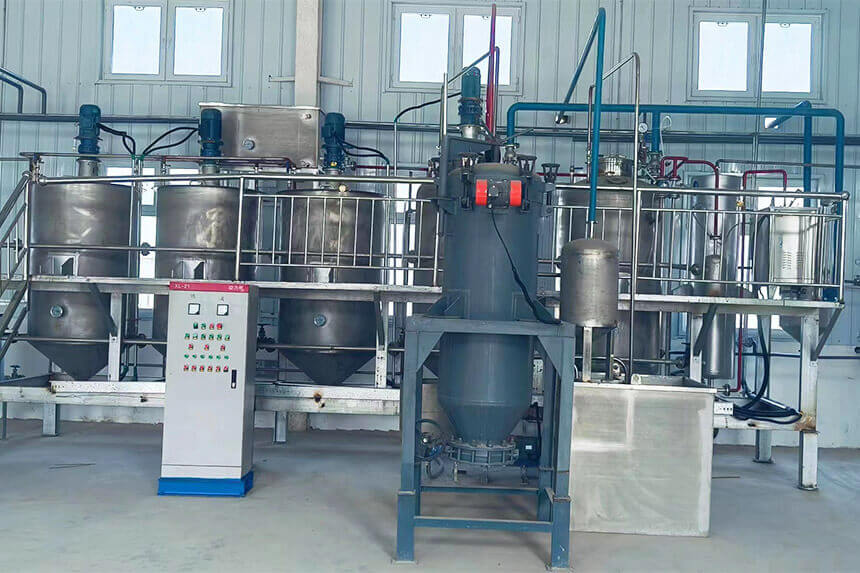
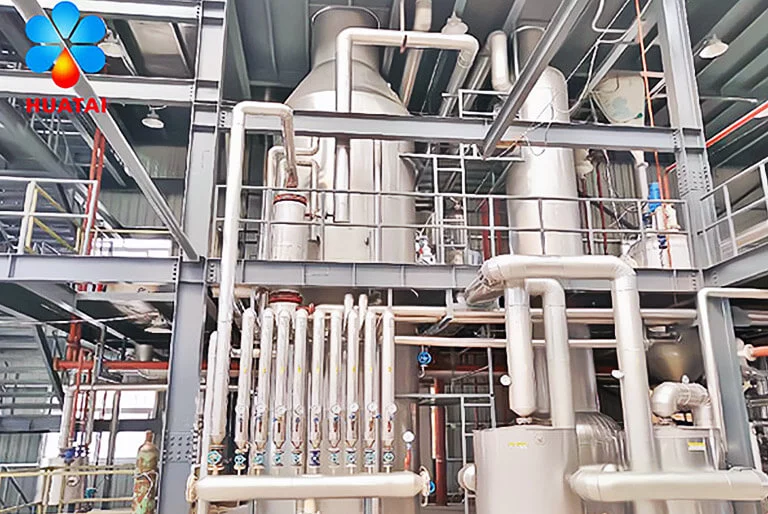
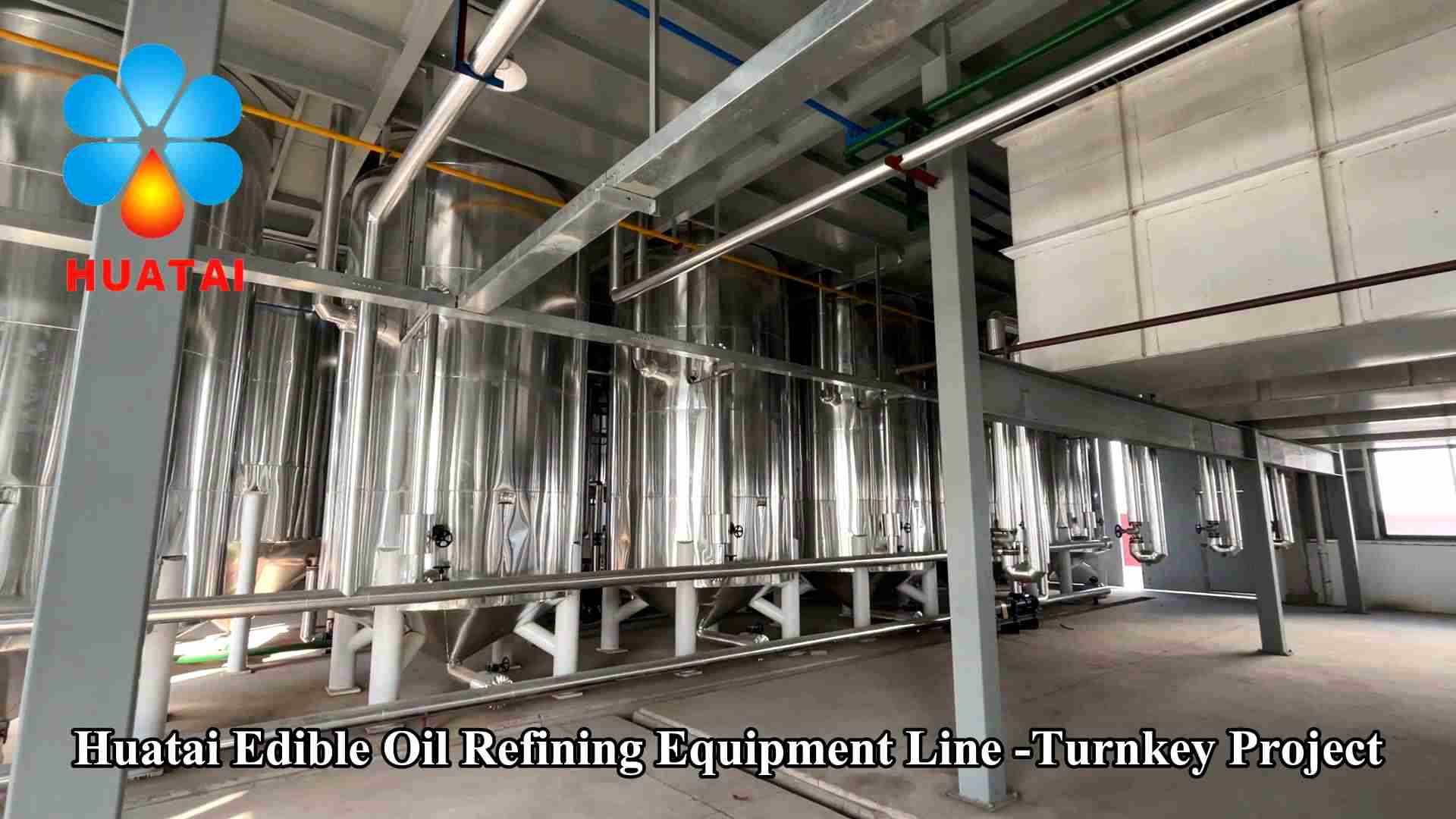
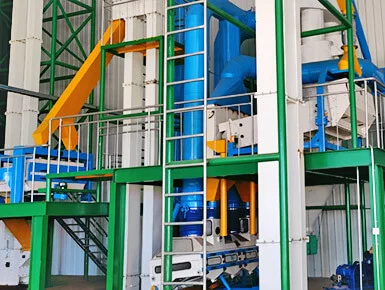
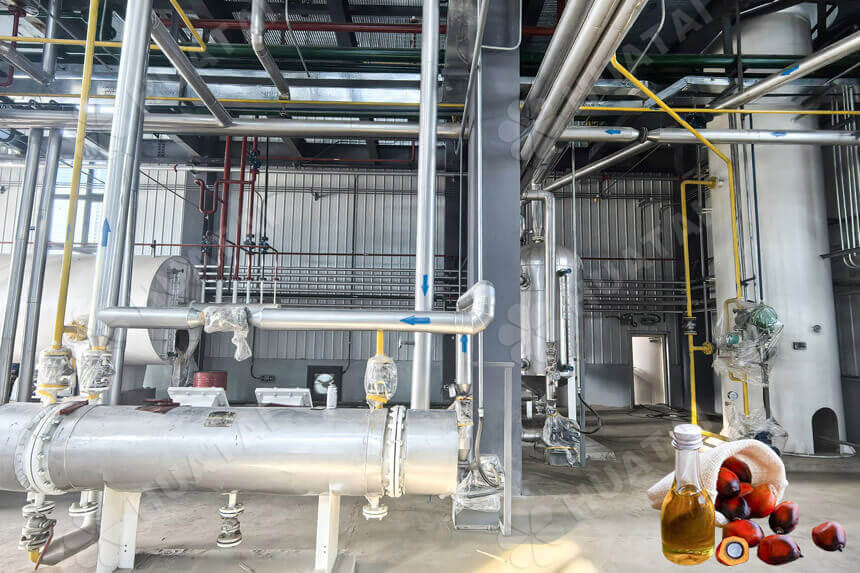
- Packed peodorization tower: It is core machine of the deodorization system, allowing oil to form a thin film on the structured packing surface, countercurrent contact with steam. This design has high mass transfer efficiency and low pressure loss. It features a compact structure, small external surface area, low heat loss, and reduced steam consumption.
- Vacuum system: Comprising steam jet pumps, atmospheric condensers, and auxiliary vacuum pumps. Its performance directly determines the operating pressure inside the deodorization tower and effectiveness.
- Heat exchange system: Includes heat economizers, final heaters, and coolers that handle oil preheating, heating, and cooling. An efficient heat exchange network substantially recovers process heat energy, reducing steam and cooling water consumption while saving cost.
- Condensation recovery system: Consisting of scrubbing towers, condensers, and circulation systems. It can capture and condense volatile substances stripped from oil, particularly ffa, recovering value byproducts.
Conclusion
Huatai Intelligent Equipment Group has spent decades perfecting palm oil deodorization technology. Our deodorization system reduces steam consumption by up to 50% while shortening processing time and maximizing oils quality.
Whether you're building a new palm oil production factory, upgrading existing palm oil machinery, our engineering team brings support to your project.
Contact us today for a free consultation and discover how our advanced deodorization systems can improve your product quality, reduce operating costs.
Frequently Asked Questions
Why does palm oil need deodorization?
Palm oil needs deodorization to remove odors, free fatty acids (FFAs), and volatile compounds like aldehydes and ketones, which affect its taste and smell. This makes the oil neutral and suitable for cooking and industrial use.
What is the process of deodorization of oil?
Palm oil deodorization is removing volatile components causing odors from the oil using steam under high temperatures (240–260°C) and high vacuum conditions (<3 mbar).
What is the principle of palm oil deodorization?
The principle is to remove volatile compounds by heating the oil under vacuum, using steam to carry away odors and FFAs. This ensures a neutral taste and extended shelf life.
What affects palm oil deodorization?
Factors affecting palm oil deodorization include temperature, vacuum pressure, steam volume, and deodorization time. Balancing and optimizing these factors can improve deodorization effect.
What is the temperature of deodorization?
For palm oil, deodorization typically occurs at 240-260°C. This temperature range ensures effective removal of volatile compounds while minimizing the formation of harmful by-products like GE.
References: